
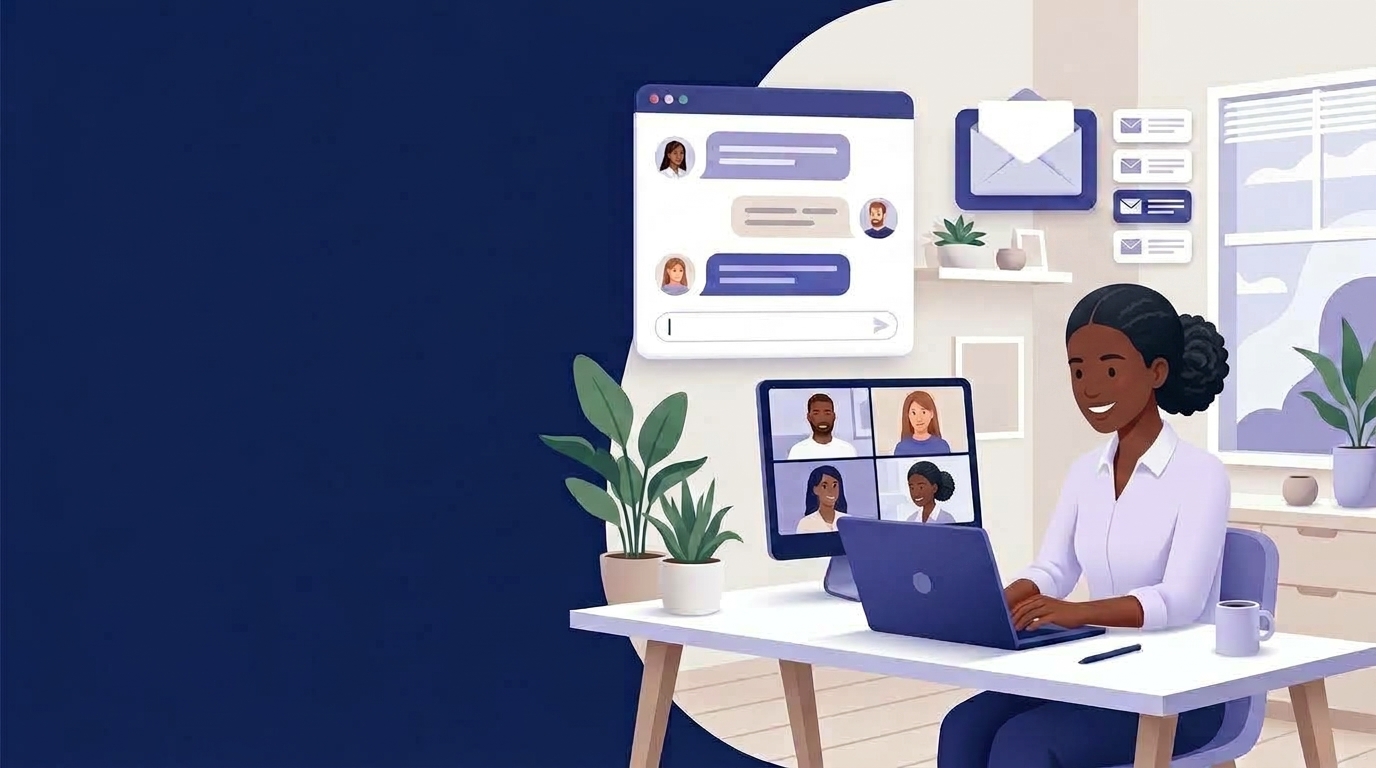
Remote work runs on several different communication tools, each genuinely suited to different kinds of messages, and using the wrong one for a specific situation is a genuinely common, avoidable source of friction and miscommunication.
Slack and Chat Tools: Quick, Informal, Real-Time
Chat tools like Slack work well for quick questions, brief updates, and informal, real-time back-and-forth that doesn't require extensive documentation or formality. The expectation is generally faster response times than email, though genuinely urgent matters still deserve a more direct signal than simply posting and hoping it's seen promptly.
Tone on these platforms tends to be somewhat more casual than email, though this genuinely varies by company culture, paying attention to how your specific team already communicates on the platform helps you calibrate your own tone appropriately rather than assuming a universal standard applies everywhere.
Email: Formal, Detailed, and Externally-Facing
Email generally suits more formal communication, detailed updates, anything externally-facing to clients or partners, or messages that genuinely benefit from a clear, documented record. The expectation around response time is typically more relaxed than chat tools, same working day is often reasonable rather than an immediate reply.
Email's more formal, documented nature also makes it well suited to anything where a clear written record matters, agreements, official updates, anything you might genuinely need to reference back to later.
Video Calls: Complexity, Nuance, and Relationship-Building
Video calls genuinely shine for topics with real complexity or back-and-forth potential that would be cumbersome and slow over text, and for conversations where tone and nuance matter considerably, sensitive feedback, resolving a genuine disagreement, or simply building rapport with a new colleague or client you haven't met.
Overusing video calls for things that could genuinely be handled more efficiently over chat or email is its own common mistake though, not every update needs a scheduled call, using the right tool for the actual complexity of a specific message matters in both directions.
Avoiding Tone Misreadings in Written Communication
Text strips out tone cues that voice or in-person communication naturally provides, which means a genuinely neutral message can easily be misread as curt or frustrated. Being slightly more explicit than feels natural, clarifying intent directly, adding a brief, genuine pleasantry, helps prevent this common, avoidable source of friction.
How VAA Global Builds These Habits
VAA Global's courses use a genuine mix of these communication tools throughout training, live video classes, written assignment feedback, course community channels, so you're building real, practical comfort across all three before you're navigating them in a first remote job.
Adapting to a Specific Team's Actual Tool Preferences
Beyond the general principles here, every team genuinely has its own specific conventions, which particular chat channels get used for what, how formal their emails typically are, expectations around video call frequency, worth learning specifically within your first few weeks rather than assuming a universal standard applies everywhere identically.
Paying close, genuine attention to how established colleagues actually use each tool, then matching that observed pattern, tends to help you integrate considerably more smoothly than following a generic guide without adapting it to your specific team's real, lived conventions.
This adaptability, being willing to adjust your own communication habits to match a specific team's genuine culture, is itself one of the more valuable, transferable professional skills a remote worker can build across an entire career.
Why Getting This Right Early Genuinely Matters
First impressions around communication style form quickly in a new remote role, and a genuine miscalibration early on, being too casual in a formal context, or overly formal in a genuinely relaxed team, can take real time to correct once an initial impression has settled.
This is exactly why observing carefully before assuming, watching how established colleagues actually communicate for your first week or two before fully calibrating your own style, tends to produce a considerably smoother integration than guessing confidently from day one.
This visibility, done thoughtfully rather than boastfully, genuinely serves both you and your future employer, since a clear record of your contributions also helps them make a well-informed conversion decision.
If you're still weighing this against other paths, the free Career Compass quiz at vaaglobal.tech/career-compass can help you figure out which course genuinely fits your goals.
Once you're genuinely job-ready, VAA Global Talent at talent.vaaglobal.tech connects graduates directly with employers actively hiring for exactly this kind of skill.
VAA Global's free CV and LinkedIn review tool at vaaglobal.tech/cv-review can also help you present this experience clearly once you're ready to apply.
FlexJobs Remote Work Trends Report has published research specifically on this, and it lines up closely with what's described here.
This isn't just anecdotal either, Upwork Freelance Forward Research has published findings that point in exactly the same direction.
World Economic Forum Future of Jobs Report has tracked this pattern closely, and their findings reinforce exactly the point made here.
Communicating Well Across Every Channel
Choosing the right tool for a specific message is a genuinely learnable, practical skill. If you're building toward a remote career, you can apply to VAA Global to build this alongside your core skills.